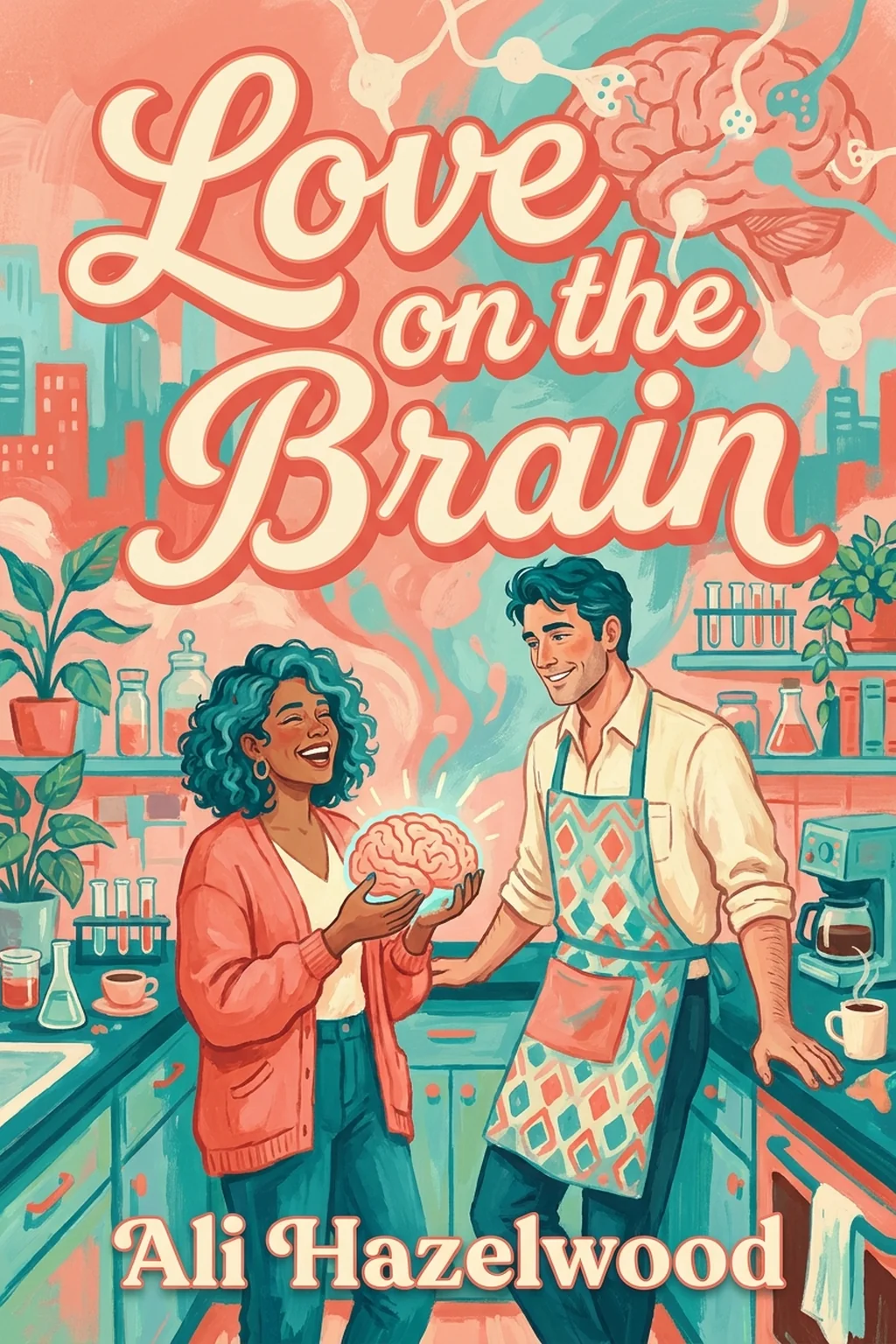
Love on the Brain
Love on the Brain understands that the best romantic comedies are about proximity and nerve. At 96,354 words in 29 chapters it sits comfortably in unhurried territory, and the content rating is moderate.
Overview
Love on the Brain understands that the best romantic comedies are about proximity and nerve. At 96,354 words in 29 chapters it sits comfortably in unhurried territory, and the content rating is moderate. Love on the Brain understands that the best romantic comedies are about proximity and nerve.
Love on the Brain takes its time establishing the world before it asks anything of the reader, and it pays that time back later.
The middle stretch of Love on the Brain is where the book finds its own rhythm, and Ali Hazelwood spends it carefully.
There is a confidence in the writing of Love on the Brain — Ali Hazelwood does not explain a feeling when showing it will do.
At a glance
- Author
- Ali Hazelwood
- Genre
- Contemporary Romance
- Series
- Standalone
- Publisher
- Independently published
- Published
- January 1, 0101
- Length
- 96,354 words
- Chapters
- 29
- Est. reading time
- 385 minutes
- Point of view
- Third person
- Pace
- Unhurried
- ISBN
- Not listed
Reading profile
What the shape of this book feels like before you start it.
Tone
Warm, conversational and grounded in everyday life
Pace
Unhurried and immersive, rewarding a slower read.
Point of view
Third person
Length
96,354 words across 29 chapters, around 385 minutes at an average reading pace.
Love on the Brain runs to 29 chapters. That is enough room for Ali Hazelwood to plant something early and pay it off much later, which is the clearest sign of a plot that was planned rather than improvised.
Tropes and themes
The patterns this book draws on, and what each one does to the story.
Workplace
The professional relationship keeps colliding with the personal one, and the collision is where the book gets its energy.
Opposites Attract
The book keeps returning to a small number of questions about honesty and self-image, and the romance is the place where those questions get answered.
Second Chances
The book keeps returning to a small number of questions about honesty and self-image, and the romance is the place where those questions get answered.
Chapter guide
The real table of contents for Love on the Brain, grouped into the four movements of the book.
Part One — The Opening
The first quarter of Love on the Brain is setup, and Ali Hazelwood does it with intent. Rather than throwing the reader into the middle of a life, this stretch establishes what the two leads each want and how badly the current arrangement is working for them.
- Praise For: THE LOVE HYPOTHESISThe final approach — everything narrows toward the ending.708 words
- Chapter 1: The Habenula: DisappointmentA chapter that mostly exists to let a decision land.5k words
- Chapter 2: Vagus Nerve: BlackoutThe final approach — everything narrows toward the ending.5k words
- Chapter 3: Angular Gyrus: Pay AttentionWhere the cost of what they want starts to become clear.5k words
- Chapter 4: Parahippocampal Gyrus: SuspicionDeepens the emotional stakes without adding new machinery.3k words
- Chapter 5: Amygdala: AngerA quieter chapter, and one of the few places the book lets the setting speak.4k words
- Chapter 6: Heschl’s Gyrus: Hear, HearA chapter that mostly exists to let a decision land.4k words
Part Two — The Rising Action
The second quarter is where the book starts to push. The obstacles that were background become active, and the leads have to respond to each other rather than simply exist in the same story. Expect the pace to pick up here.
- Chapter 7: Orbitofrontal Cortex: HopeA chapter that mostly exists to let a decision land.3k words
- Chapter 8: Precentral Gyrus: MovementThe consequences catch up, and the earlier choices start to matter.4k words
- Chapter 9: Medial Frontal Cortex: Maybe I Was Wrong?The last of the movement, and the setup for the final turn.5k words
- Chapter 10: Dorsolateral Prefrontal Cortex: UntruthsThe reconciliation is built here, out of what the book has already earned.3k words
- Chapter 11: Nucleus Accumbens: GamblingThe closing chapter, which leaves the reader where it should.3k words
- Chapter 12: Ventral Striatum: YearningThe consequences catch up, and the earlier choices start to matter.2k words
- Chapter 13: Superior Colliculi: Will You Look at That?Where the pace picks up and the situation stops being manageable.3k words
Part Three — The Turn
Past the midpoint, Love on the Brain turns. Complications that were planted earlier arrive, and the tone darkens for a while before the book begins to gather its threads. This is where the book earns the ending it is going to deliver.
- Chapter 14: Periaqueductal Gray & The Hippocampus: Painful MemoriesThe middle stretch, and the part where the dynamic between them starts to shift.4k words
- Chapter 15: Fusiform Area: Familiar FacesThe reconciliation is built here, out of what the book has already earned.4k words
- Chapter 16: Subthalamic Nucleus: InterruptionsThe complication lands, and the earlier threads begin to converge.5k words
- Chapter 17: Pulvinar: Reaching & GraspingWhere the pace picks up and the situation stops being manageable.4k words
- Chapter 18: Raphe Nuclei: HappinessA quieter chapter, and one of the few places the book lets the setting speak.5k words
- Chapter 19: Basolateral Amygdala: ArachnophobiaThe last of the movement, and the setup for the final turn.4k words
- Chapter 20: Ventral Tegmental Area: Romantic LoveWhere the plot and the relationship accelerate together.4k words
Part Four — The Resolution
The final stretch resolves what the middle raised. Ali Hazelwood closes the outstanding threads rather than leaving them dangling, and the last chapters are quieter than the ones before them — which is usually a sign the work is done.
- Chapter 21: Right Inferior Frontal Gyrus: SuperstitionThe tension between them reaches its most visible form.2k words
- Chapter 22: Anterior Cingulate Cortex: Oh, ShitWhere the pace picks up and the situation stops being manageable.3k words
- Chapter 23: Amygdala, Again: FearThe point of no return, and the chapter the rest of the book is built around.2k words
- Chapter 24: Right Temporal Lobe: Aha!A quieter chapter, and one of the few places the book lets the setting speak.5k words
- Chapter 25: Oriens-Lacunosum Moleculare Interneurons: CourageThe pressure arrives here, and the tone darkens slightly.3k words
- EpilogueThe tension between them reaches its most visible form.2k words
- Author’s NoteDeepens the emotional stakes without adding new machinery.874 words
- What’s next on your reading list?The complication lands, and the earlier threads begin to converge.30 words
Content notes
Heat rating: moderate (2/5). See the site-wide content advisories for a full list of what to check before starting. <a href="/disclaimer/">Read the content notes</a>.
Who should read this
Readers who want a clean emotional arc
If you prefer a romance that resolves its tensions rather than leaving them for a sequel, Love on the Brain closes its threads properly.
Readers who like a genre book to stay inside its genre
Love on the Brain does not try to subvert the conventions of Contemporary Romance; it executes them well. If you want a clean example of Contemporary Romance, that is what this is.
Readers who like slow builds
If you prefer a romance that takes its time establishing the people before it asks them to make a decision, Love on the Brain rewards patience. The first third is doing real work.
Readers who want the tension to stay high
This is not a book that lets the pressure drop for long. Ali Hazelwood keeps something unresolved for most of the middle, which suits readers who like the difficulty of getting there.
If this one appeals, try these
Similar genre, tropes and tone — from the LumiNridge catalogue.

Love, Theoretically
Contemporary Romance · Unhurried · 104k words · Fake Dating & Workplace

Below Zero
Contemporary Romance · Compact · 38k words · Workplace & Opposites Attract

Every Summer After
Contemporary Romance · Unhurried · 91k words · Second Chance & Workplace

Lucy Checks In
Contemporary Romance · Unhurried · 84k words · Workplace & Opposites Attract

Me Before You
Contemporary Romance · Unhurried · 134k words · Workplace & Opposites Attract

Never Give Your Heart To A Hookup
Contemporary Romance · Unhurried · 102k words · Workplace & Opposites Attract
Editorial verdict
If you read Contemporary Romance and have been wondering whether there is another one worth your evening, Love on the Brain is a reasonable answer: it is unhurried, it is moderate in content, and it does what it set out to do without wandering.
About Ali Hazelwood
Ali Hazelwood has 4 titles in the LumiNridge catalogue, including Below Zero and Not in Love. The other titles listed on the author page cover a different corner of the shelf.
More by Ali Hazelwood

Frequently asked questions
Who published Love on the Brain?
Independently published published it in 0101. The catalogue records an ISBN of not recorded, and the page lists the publication details alongside the reading profile.
Does Love on the Brain have a series?
Not on its own. It stands alone, which means you can read it without tracking a series order, and nothing else in this catalogue depends on having read it first.
How does Love on the Brain compare to other Contemporary Romance books?
Among the Contemporary Romance shelf, Love on the Brain is one of the unhurried entries. The books listed under “If this one appeals, try these” are the closest matches by genre, trope and tone.
How long does Love on the Brain take to read?
It runs to roughly 96,354 words across 29 chapters — about 385 minutes at an average reading pace. That makes it a comfortable weekend read, or something you can work through in a week of short evening sessions.
What tropes does Love on the Brain use?
The catalogue tags it with Workplace, Opposites Attract, Second Chances. Each of those shapes a different part of the plot, and the tropes section on this page explains what each one does to the story.