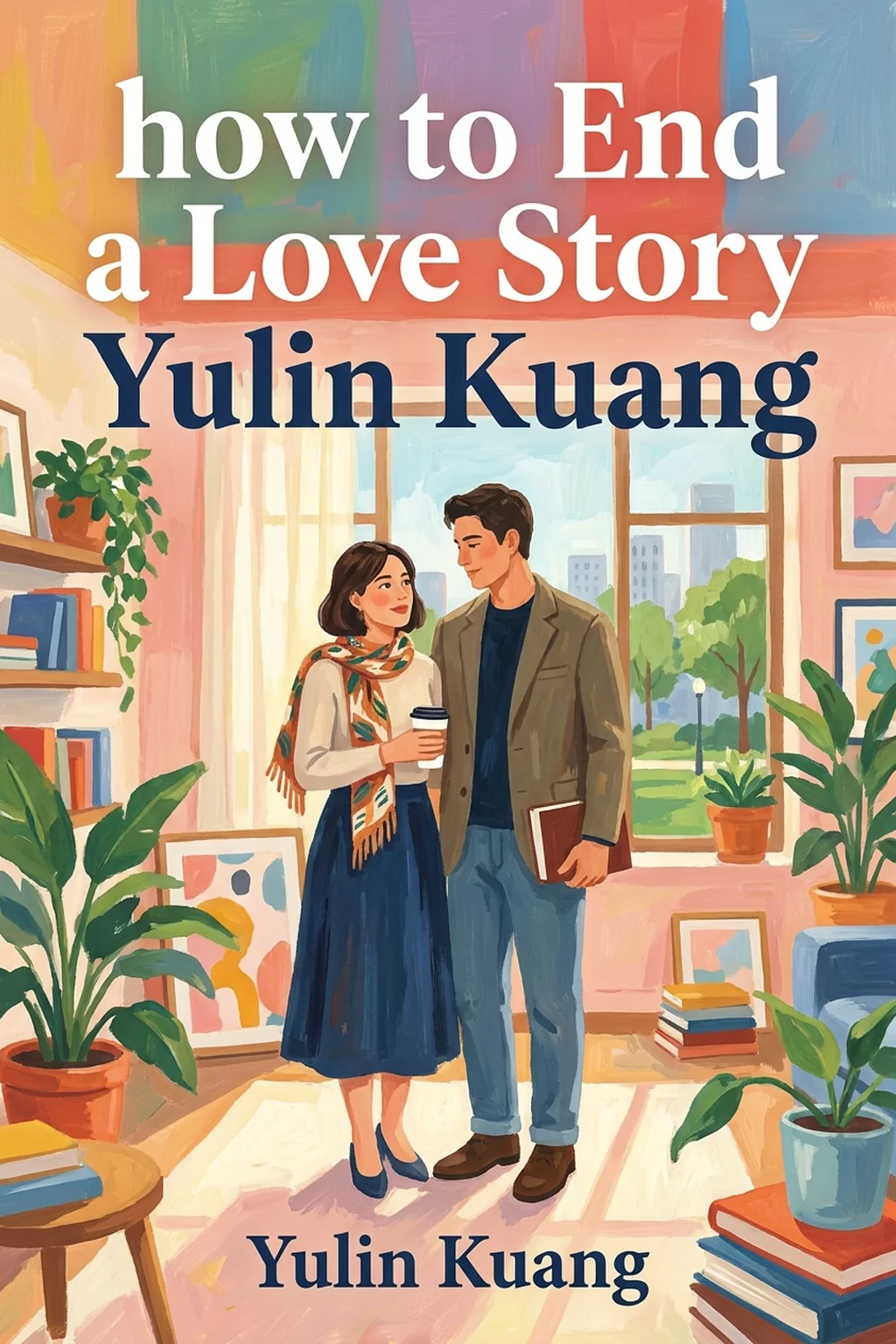
How to End a Love Story
Yulin Kuang sets How to End a Love Story in the real world, with real hours and real errands. Yulin Kuang writes it in Third person, across 36 chapters and roughly 103,887 words — a steady read that puts Workplace, Opposites Attract, Second Chances at the centre of it.
Overview
Yulin Kuang sets How to End a Love Story in the real world, with real hours and real errands. Yulin Kuang writes it in Third person, across 36 chapters and roughly 103,887 words — a steady read that puts Workplace, Opposites Attract, Second Chances at the centre of it. Nothing in How to End a Love Story is bigger than it needs to be, which is exactly why it works.
The second half of How to End a Love Story gathers threads that were planted early, and the gathering is patient rather than sudden.
Yulin Kuang writes in short, controlled sentences, and How to End a Love Story is no exception — the pacing is deliberate rather than hurried.
How to End a Love Story earns its ending through accumulation rather than a single twist, which is rarer and more satisfying than it sounds.
At a glance
- Author
- Yulin Kuang
- Genre
- Contemporary Romance
- Series
- Standalone
- Publisher
- HarperCollins
- Published
- April 9, 2024
- Length
- 103,887 words
- Chapters
- 36
- Est. reading time
- 416 minutes
- Point of view
- Third person
- Pace
- Steady
- ISBN
- 9780063310681
Reading profile
What the shape of this book feels like before you start it.
Tone
Warm, conversational and grounded in everyday life
Pace
Steady and well-paced, with room for both plot beats and character work.
Point of view
Third person
Length
103,887 words across 36 chapters, around 416 minutes at an average reading pace.
At 36 chapters and around 103,887 words, How to End a Love Story is a book you can read in a single focused sitting or spread across a fortnight without losing the thread. The chapter divisions are frequent enough that it never feels like a wall, and long enough that each one earns its own space.
Tropes and themes
The patterns this book draws on, and what each one does to the story.
Workplace
The professional relationship keeps colliding with the personal one, and the collision is where the book gets its energy.
Opposites Attract
The book keeps returning to a small number of questions about honesty and self-image, and the romance is the place where those questions get answered.
Second Chances
The book keeps returning to a small number of questions about honesty and self-image, and the romance is the place where those questions get answered.
Chapter guide
The real table of contents for How to End a Love Story, grouped into the four movements of the book.
Part One — The Opening
The first quarter of How to End a Love Story is setup, and Yulin Kuang does it with intent. Rather than throwing the reader into the middle of a life, this stretch establishes what the two leads each want and how badly the current arrangement is working for them.
- OneThe second half opens out, and the consequences begin arriving.891 words
- TwoThe midpoint of the central arc, where the stakes become explicit.2k words
- ThreeThe first real friction, and the point where the premise starts to bite.5k words
- FourThe first real friction, and the point where the premise starts to bite.4k words
- FiveWhere the cost of what they want starts to become clear.4k words
- SixThe threads start to gather, and the ending becomes visible.1k words
- SevenThe threads start to gather, and the ending becomes visible.3k words
- EightThe pressure arrives here, and the tone darkens slightly.4k words
- NineWhere the plot and the relationship accelerate together.5k words
Part Two — The Rising Action
The second quarter is where the book starts to push. The obstacles that were background become active, and the leads have to respond to each other rather than simply exist in the same story. Expect the pace to pick up here.
- TenThe closing chapter, which leaves the reader where it should.4k words
- ElevenTurns the plot toward the complication that carries the second half.3k words
- TwelveThe midpoint of the central arc, where the stakes become explicit.1k words
- ThirteenWhere the pace picks up and the situation stops being manageable.2k words
- FourteenThe second half opens out, and the consequences begin arriving.3k words
- FifteenWhere the pace picks up and the situation stops being manageable.4k words
- SixteenThe consequences catch up, and the earlier choices start to matter.3k words
- SeventeenWhere the cost of what they want starts to become clear.5k words
Part Three — The Turn
Past the midpoint, How to End a Love Story turns. Complications that were planted earlier arrive, and the tone darkens for a while before the book begins to gather its threads. This is where the book earns the ending it is going to deliver.
- EighteenWhere the plot and the relationship accelerate together.1k words
- NineteenWhere the cost of what they want starts to become clear.4k words
- TwentyDeepens the emotional stakes without adding new machinery.6k words
- Twenty-OneDeepens the emotional stakes without adding new machinery.2k words
- Twenty-TwoA setback that is honest rather than convenient.887 words
- Twenty-ThreeThe closing stretch, in which the book pays off what it has been promising.3k words
- Twenty-FourSets the ground the rest of the book stands on.3k words
- Twenty-FiveThe closing chapter, which leaves the reader where it should.2k words
- Twenty-SixDeepens the emotional stakes without adding new machinery.2k words
Part Four — The Resolution
The final stretch resolves what the middle raised. Yulin Kuang closes the outstanding threads rather than leaving them dangling, and the last chapters are quieter than the ones before them — which is usually a sign the work is done.
- Twenty-SevenSets the ground the rest of the book stands on.3k words
- Twenty-EightA quieter chapter, and one of the few places the book lets the setting speak.2k words
- Twenty-NineA quieter chapter, and one of the few places the book lets the setting speak.6k words
- ThirtyThe reconciliation is built here, out of what the book has already earned.5k words
- Thirty-OneA setback that is honest rather than convenient.2k words
- Thirty-TwoEstablishes what each character wants before they know they are in conflict.3k words
- Thirty-ThreeThe closing stretch, in which the book pays off what it has been promising.33 words
- Thirty-FourEstablishes what each character wants before they know they are in conflict.957 words
- Thirty-FiveThe last of the movement, and the setup for the final turn.5k words
Content notes
Heat rating: moderate (2/5). See the site-wide content advisories for a full list of what to check before starting. <a href="/disclaimer/">Read the content notes</a>.
Who should read this
Readers who like their leads to be competent
Both characters here are good at what they do and better at their jobs than at their relationships. That is the appeal for readers who are tired of protagonists who need rescuing.
Readers who read for the setting
The world of How to End a Love Story is doing more than providing atmosphere. Yulin Kuang uses it as a source of friction, and it will appeal if you enjoy a romance embedded in a specific place.
Readers who like a book with a shape
With 36 chapters and a clear structure, How to End a Love Story is easy to pick up and put down without losing your place — which matters more than it sounds in a long read.
Readers who want the tension to stay high
This is not a book that lets the pressure drop for long. Yulin Kuang keeps something unresolved for most of the middle, which suits readers who like the difficulty of getting there.
If this one appeals, try these
Similar genre, tropes and tone — from the LumiNridge catalogue.
Bad Girl Reputation
Contemporary Romance · Steady · 88k words · Second Chance & Workplace

Heart Bones
Contemporary Romance · Steady · 81k words · Workplace & Opposites Attract
In the Likely Event
Contemporary Romance · Steady · 105k words · Workplace & Opposites Attract

It Ends With Us
Contemporary Romance · Steady · 106k words · Workplace & Opposites Attract
Meet Me in the Margins
Contemporary Romance · Steady · 83k words · Office Romance & Workplace
Thank You for Listening
Contemporary Romance · Steady · 98k words · Workplace & Opposites Attract
Editorial verdict
Start with How to End a Love Story if you want steady pacing and a voice you can settle into. It is one of the more confident Contemporary Romance books in the catalogue, and the 103,887-word count is not a problem.
About Yulin Kuang
Yulin Kuang appears once in the LumiNridge catalogue. The book stands on its own, and the author page collects the full shelf for reference.
Frequently asked questions
How does How to End a Love Story compare to other Contemporary Romance books?
Among the Contemporary Romance shelf, How to End a Love Story is one of the steady entries. The books listed under “If this one appeals, try these” are the closest matches by genre, trope and tone.
Is How to End a Love Story a Contemporary Romance book?
Yes. It is catalogued as Contemporary Romance, and the tropes it leans on — Workplace, Opposites Attract, Second Chances — are all drawn from that shelf. If you have read widely in the genre and want an example that executes the conventions well, this is worth a look.
How explicit is How to End a Love Story?
It sits in the moderate range of the shelf. There are intimate scenes, but the emphasis is on what the characters are feeling rather than on explicit detail.
What is the point of view in How to End a Love Story?
It is told in Third person. The third-person narration lets the book step back far enough to show what the characters cannot see about themselves.
Who published How to End a Love Story?
HarperCollins published it in 2024. The catalogue records an ISBN of 9780063310681, and the page lists the publication details alongside the reading profile.